6 March 2025 · 3 min read
Living with linen
Linen creases. That is not a flaw to be managed — it is the fabric telling you it is real.
Linen is a bast fibre, spun from the stalk of the flax plant. The fibre is strong, slightly irregular and barely elastic — which is why a linen shirt holds its shape away from the body, why it feels cool in heat, and why it creases the moment you sit down.
Those three things come from the same property. You cannot have the first two without the third. Once you stop fighting the creases, linen becomes the easiest cloth in a wardrobe to live with.
Washing
- Wash cool, on a gentle cycle, with similar colours.
- Use less detergent than you think — linen holds residue, and residue stiffens the hand.
- Skip fabric softener entirely. It coats the fibre and stops it softening naturally.
- Do not overload the drum. Linen needs room to move or it sets its creases hard.
Drying
Dry flat or on a low heat, and take the piece out while it is still faintly damp. Hung at that point, most of the creasing falls out on its own. Heat is the one thing that genuinely shortens a linen garment’s life, so use as little of it as you can.
Pressing, if you must
Press on the reverse while damp, with a warm — not hot — iron. A crisp linen shirt is a look. So is a soft one. Neither is wrong.
Every wash makes linen softer. It is one of very few fabrics that improves by being used.
Storing
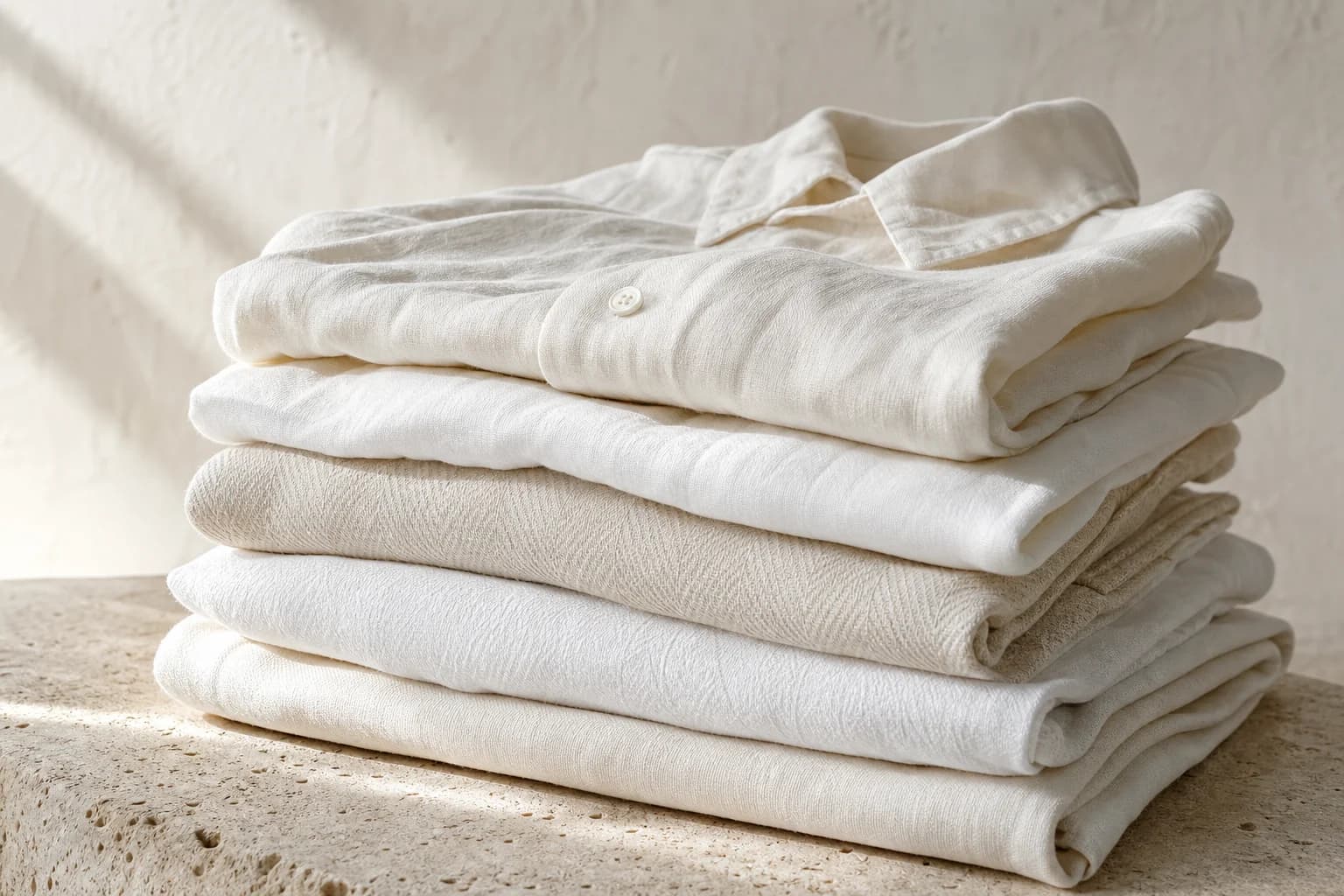
Fold knits and heavier linen rather than hanging them, so the shoulders keep their line. Give everything a little air between pieces — white cloth kept tightly packed yellows faster than white cloth left to breathe.